
Mobile RV Leak Detection in Central Texas
Water that enters an RV can travel far from its entry point before it becomes visible inside the coach. A stain on the ceiling or a damp wall panel is rarely the leak source — it is where the water ended up. Boss Bull Mobile RV Services performs on-site RV leak detection and water intrusion repair across Central Texas, locating the source and addressing it before it spreads further into the structure.
Every repair, no questions asked.
Better Business Bureau accredited.
$500–$25,000. 0–35.9% APR based on creditworthiness.
Austin and Central Texas.
Overview
RV water intrusion damage is one of the most common and most costly repair categories in the industry. RV structures are full of channels, cavities, and air gaps that allow water entering at one location to exit somewhere that appears entirely unrelated. Owners frequently report ceiling staining above the dinette when the actual entry point is the roof membrane termination rail near the front cap — several feet from where the water appeared.
The most common water entry points on RVs are roof membrane seams and penetration flanges around AC units, skylights, vents, and antenna mounts; window frame perimeter seals; marker light and running light housings; slide-out roof rail and wiper seals; and front and rear cap seam separations. Each of these locations is exposed to UV degradation, thermal expansion, vibration stress, and road movement. On Texas RVs, UV exposure accelerates sealant failure faster than in cooler climates.
Boss Bull approaches water intrusion service methodically — documenting findings, identifying the most likely entry points, and addressing them in priority order. Early service prevents the kind of structural deterioration that turns a sealant repair into a decking replacement or a ceiling stain into a slide floor substrate replacement.
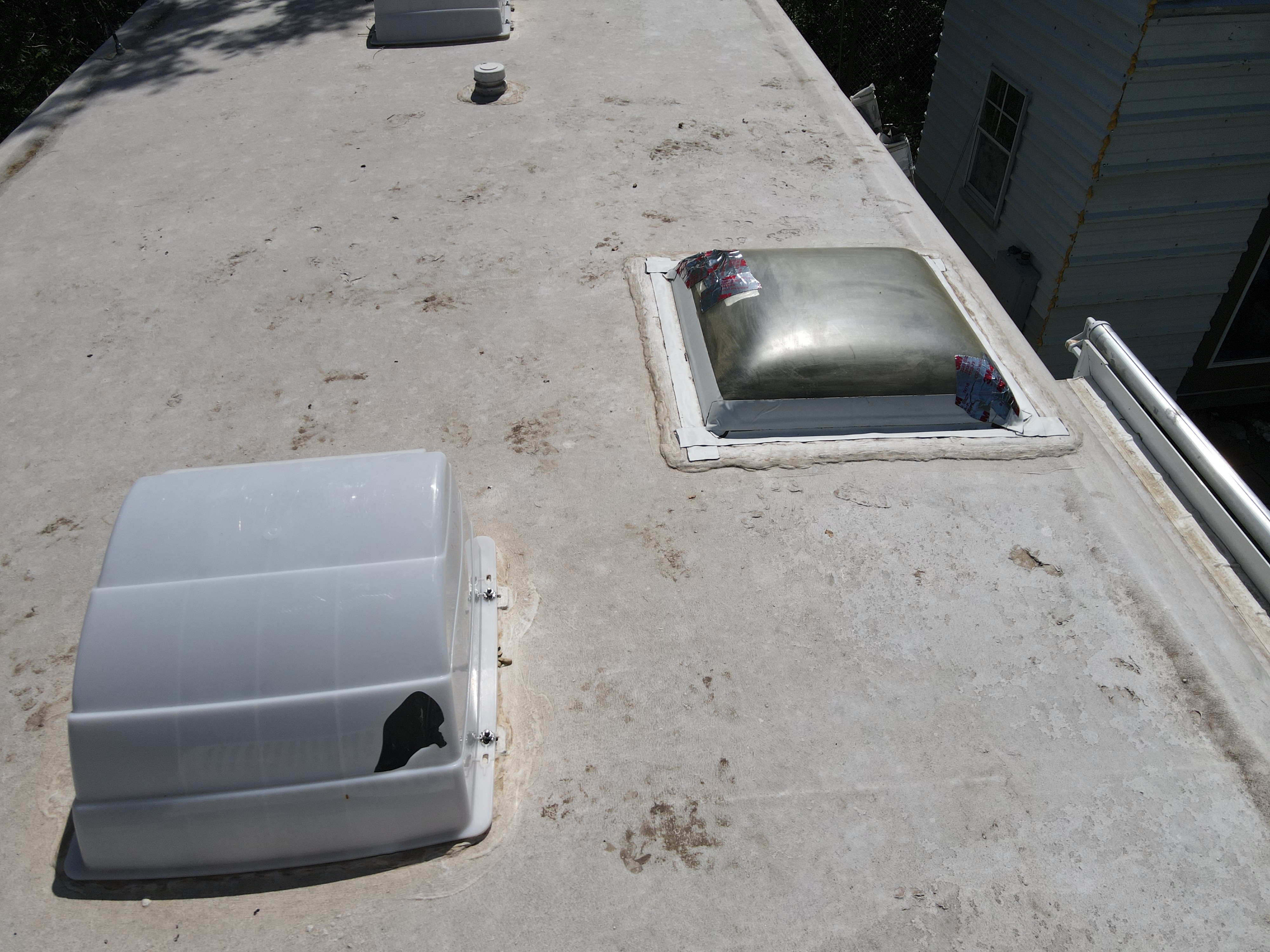
Pre-repair roof condition documented during a leak detection visit. Oxidized membrane field, cracked dome vent base, and failing sealant around the skylight penetrations are all visible before any repair begins.
Both the dome vent base and the skylight penetration showed sealant that had hardened and separated. The oxidized membrane field indicated the existing sealant system was at or past its effective service life.
Common Problems We Fix
- Ceiling staining or soft ceiling panels
- Damp or discolored interior wall panels
- Musty odor inside the coach
- Bubbling, delaminating, or soft roof membrane
- Visible mold or mildew on wall surfaces
- Water on the floor following rain
- Soft, spongy, or deteriorating slide floor
- Sealant cracking, shrinking, or pulling away from joints
- Moisture at window frames after rain
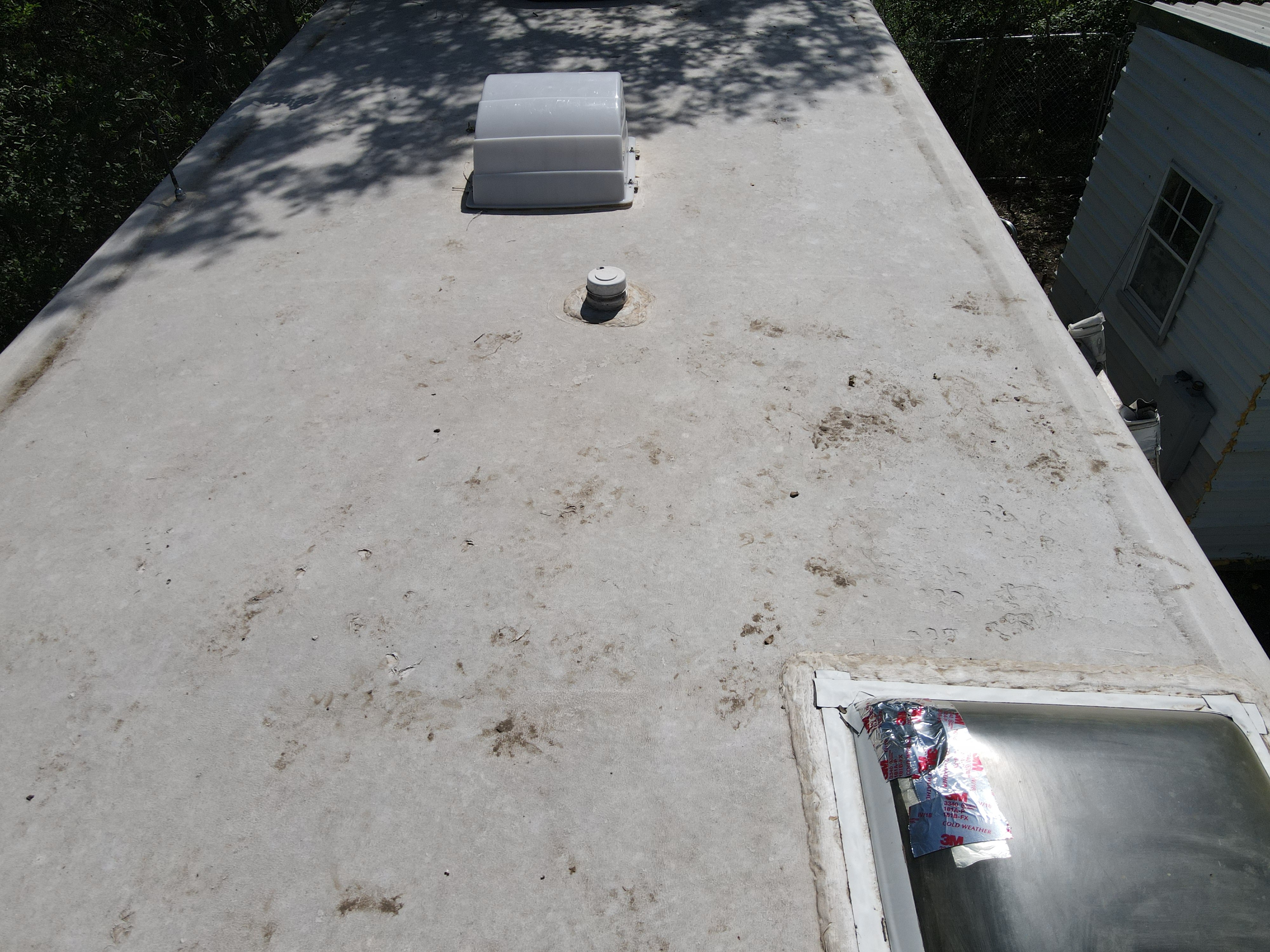
Skylight dome perimeter sealant documented before repair. Sealant that has dried and cracked away from the dome flange creates an active water entry path that feeds into the ceiling cavity below.
The sealant bead around the skylight frame had hardened and separated from the flange on most of the perimeter. This type of failure is a common water entry point found during roof-level leak detection inspections.
Common Findings During RV Leak Detection Service Calls
Water intrusion on RVs rarely presents as a single failed component. When we investigate a leak complaint in Central Texas, the following conditions appear regularly.
- Roof membrane termination rail separation — often the full length of one or both sides, not visible from ground level
- Penetration flanges at rooftop components that have lost adhesion and are allowing water to run under the base plate
- Window perimeter seals that have cracked, hardened, and separated from the frame — particularly common on south-facing walls
- Marker light and running light housings with cracked gaskets or housings that have pulled away from the sidewall skin
- Slide-out wiper seals compressed or torn from extended use or from debris contact during slide operation
- Front and rear cap seam separations that are hairline-wide but allow water entry during driving rain
- Water paths through ceiling channels that carried water from the entry point to a location several feet from the visible interior symptom
- Substrate deterioration — decking or wall framing damage — caused by long-term moisture exposure that had been occurring before the leak became visible inside the coach
Technician Observations
What Owners Commonly Report
Presenting complaints we hear most often on these service calls.
- I see a stain on the ceiling but I cannot figure out where the water is coming from
- After it rains I find water on the floor but the roof looks okay from the ground
- My slide floor is soft and I think it might be water damage
- I noticed a musty smell inside the coach that I cannot locate
- The sealant around my skylight is cracked and I want it addressed before the next rain
What We Frequently Find
Actual conditions we document when we arrive on site.
- Roof membrane termination rail separation — the drip edge on TPO and rubber roofs is not visible from ground level, and separation there creates a continuous open channel the full length of the affected side
- Marker light and running light housings that have cracked or pulled away from the sidewall skin, allowing water to run behind the skin and travel down cavity channels before pooling at floor or cabinet level
- Window perimeter seals that have hardened, cracked, and pulled away from the frame — particularly on south-facing and west-facing sidewalls where UV degradation is most severe in Central Texas
- Slide-out roof rail seals that have compressed, torn, or been damaged by debris, allowing water to enter along the full width of the slide opening
- Front cap seam separation at the roofline junction — the horizontal seam where the fiberglass front cap meets the roof field is a high-stress joint and a common entry point on coaches over five years old
- Penetration flange failures at rooftop components — AC base gaskets, skylight flanges, and vent collars where the original sealant has dried out and lost adhesion
Service Recommendations
What we typically advise based on our findings.
- Roof-level inspection is typically necessary to locate the entry point — visual review from the ground alone rarely identifies the source when the reported symptom is an interior stain
- Any soft or spongy areas on the roof membrane should be addressed as soon as possible — membrane that has lost adhesion to the decking is no longer protecting the substrate from standing water
- Schedule a water intrusion service visit before a minor sealant gap becomes a decking replacement — the cost difference between preventive resealing and structural repair is significant
- If you see staining near a window, marker light, or slide-out seal, do not wait for the next rain event to confirm the source — water intrusion damage progresses even between rainy periods
Why RV Owners Choose Mobile RV Service
- No towing required — Boss Bull comes to your RV at its current location
- Water intrusion is best assessed with the RV stationary and in the position where the leak occurs
- Service at RV parks, campgrounds, storage facilities, and residences across Central Texas
- On-site documentation means findings are photographed before any repair is applied
- Early intervention prevents water intrusion from becoming structural damage
- Financing available through Wisetack for larger repairs
Leak Sources We Commonly Service
- Roof membrane termination rails and drip edge seams
- Penetration flanges: AC bases, skylights, vents, antennas, exhaust caps
- Window perimeter frame seals
- Marker light and running light housings
- Slide-out roof rail seals, wiper seals, and end caps
- Front cap roofline seams and side cap transitions
- Rear cap sidewall seams and lower rail seams
- Dicor lap sealant and self-leveling penetration seal applications
- Alpha Systems sealant products
- Lippert slide-out seal components
Before & After
Before Repair
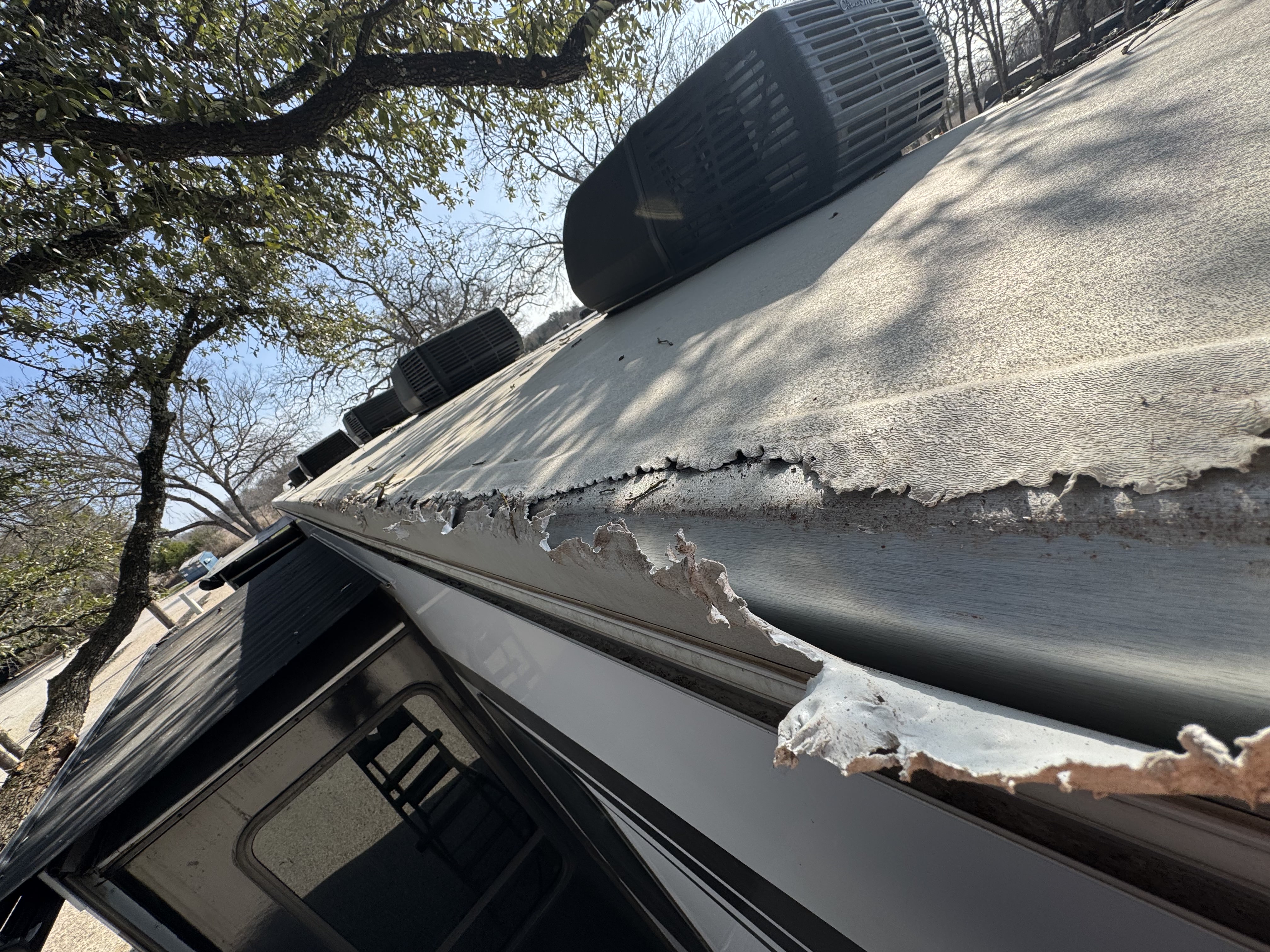
Roof membrane separation documented along the full length of the drip rail. The failed termination creates an open water entry path the entire length of the affected side.
Membrane separation at the termination rail is one of the first locations we check when an owner reports a sidewall or ceiling leak. The drip rail edge is not visible from ground level and is typically found during roof-level inspection.
Completed Repair
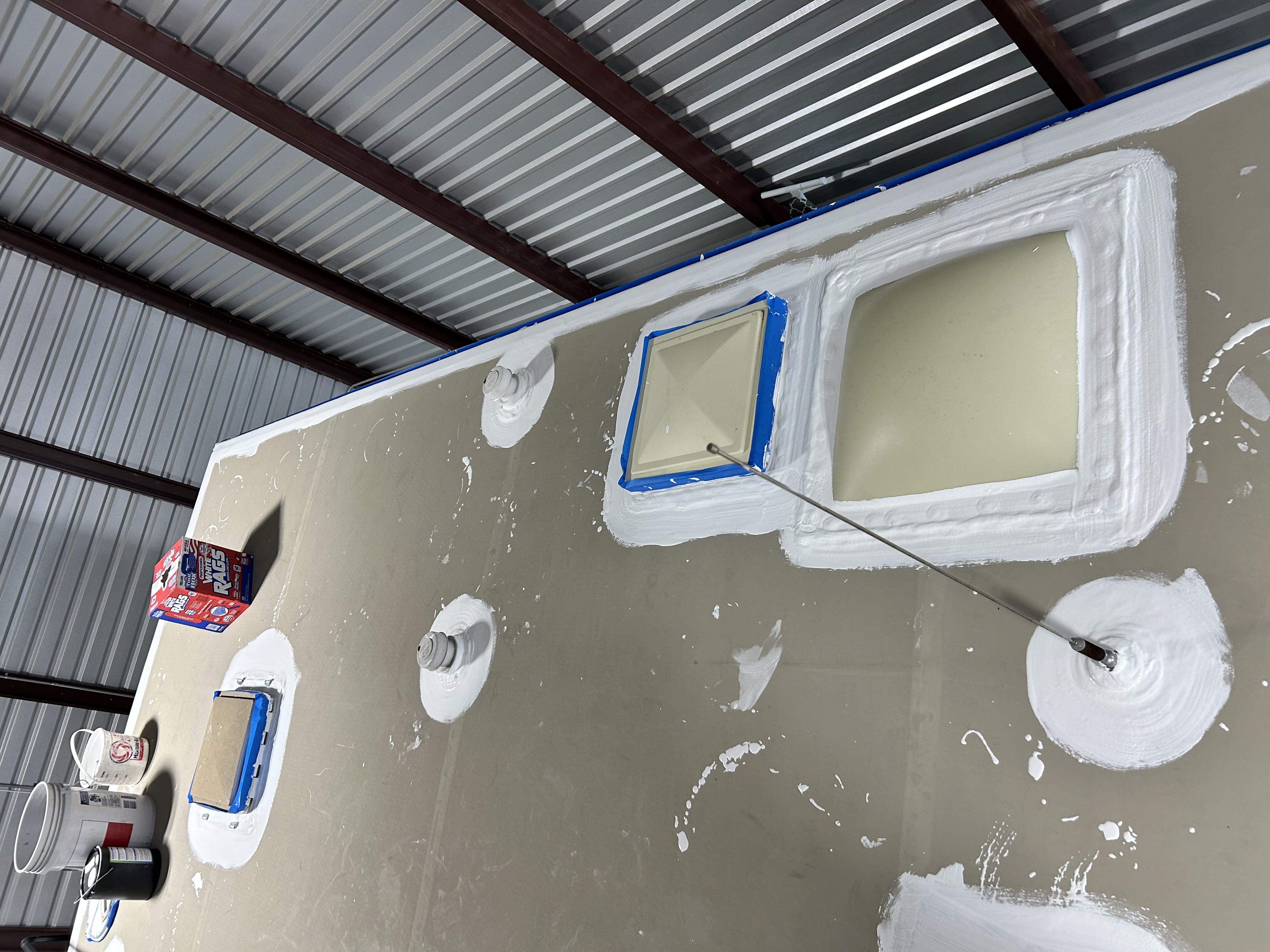
Edge rail and roof penetration treatment after the leak source was corrected. Termination rail and all penetration flanges were resealed.
The termination rail and all penetration flanges were resealed as part of this roof restoration service following leak source correction.
Related Services
Brands We Service
Service Areas
Frequently Asked Questions
What Our Customers Say
“Our camper AC went out and we called Rich on a Saturday, thinking no way we were going to get someone out on the weekend. But Rich came out that afternoon, took a look at the unit and came up with a solution.”
“He went into great detail telling me what was wrong (even showed me) and what would need to be done. He is very responsive, respectful and efficient!”
“Prices are fair. They communicate well. They show up on time. They do what they say they will do. I will never use someone else.”
Ready to get your RV back in service?
Schedule mobile RV repair across Central Texas, or call and talk to a tech now.